Diamond Education
Understanding what you're buying is the first step to making a confident purchase. Learn about diamond quality, types, and gold purity.
What Are Diamonds?
Diamonds are crystallized carbon formed deep within the Earth under extreme pressure and temperature. They are the hardest naturally occurring substance, making them perfect for everyday wear in jewelry.
When evaluating diamond quality, gemologists use the 4C's: Cut, Color, Clarity, and Carat. Understanding these factors will help you make an informed decision about your purchase.
The 4C's of Diamonds
Color
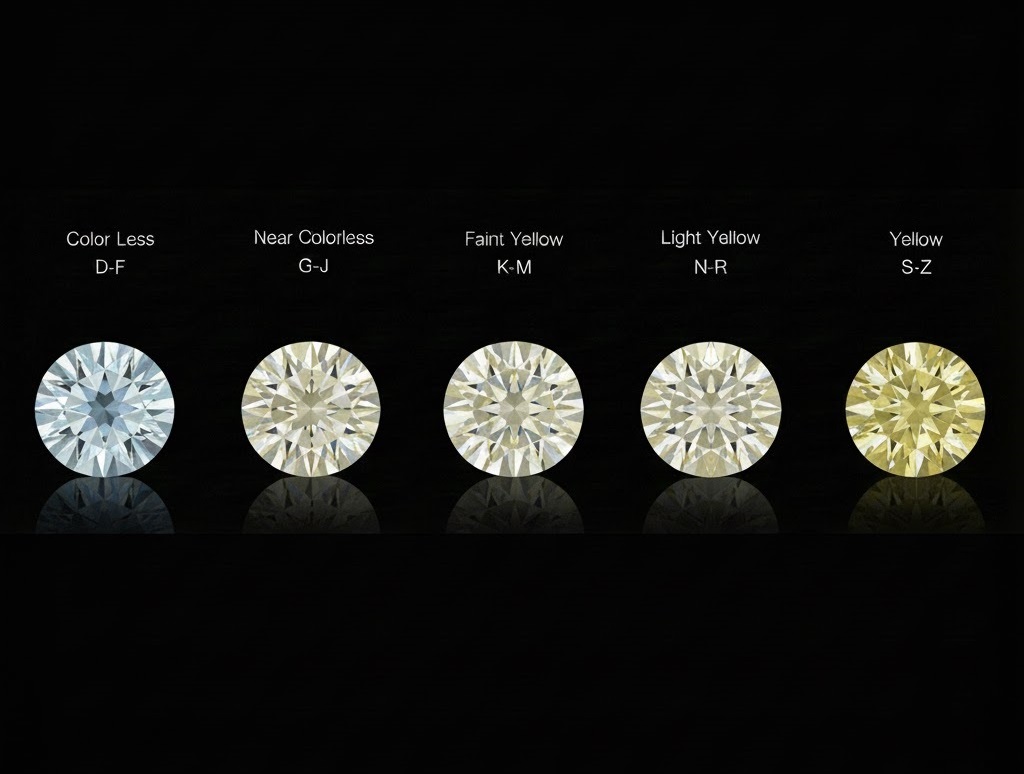
Diamond color grading measures how colorless a diamond appears. The scale ranges from D (completely colorless) to Z (light yellow or brown tint). The less color a diamond has, the more rare and valuable it is.
Most quality engagement rings use diamonds in the D-J range, where any color is difficult to detect with the untrained eye, especially when set in jewelry.
Understanding the Grades:
- D-F: Colorless - No detectable color, highest value
- G-J: Near Colorless - Minimal color, excellent value for quality
- K-M: Faint Yellow - Slight warmth visible, budget-friendly option
- N-Z: Light Yellow - Noticeable color tint, lower value
Clarity
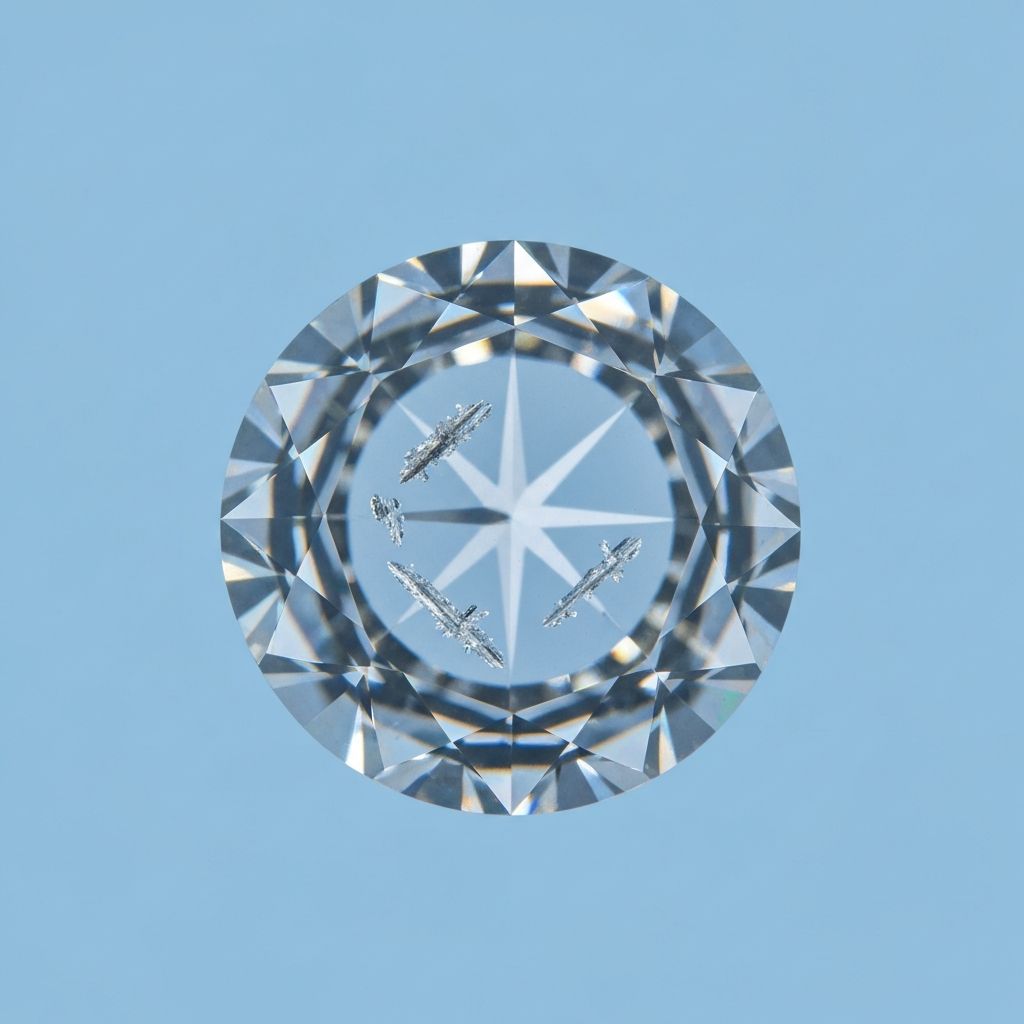
Clarity measures the presence of inclusions (internal flaws) and blemishes (external flaws). Most inclusions are microscopic and don't affect the diamond's beauty to the naked eye. The clarity scale ranges from Flawless to Included.
Clarity Grades:
- FL/IF: Flawless/Internally Flawless
- VVS1/VVS2: Very Very Slightly Included
- VS1/VS2: Very Slightly Included - Excellent choice
- SI1/SI2: Slightly Included - Good value
- I1/I2/I3: Included - Visible flaws
Cut
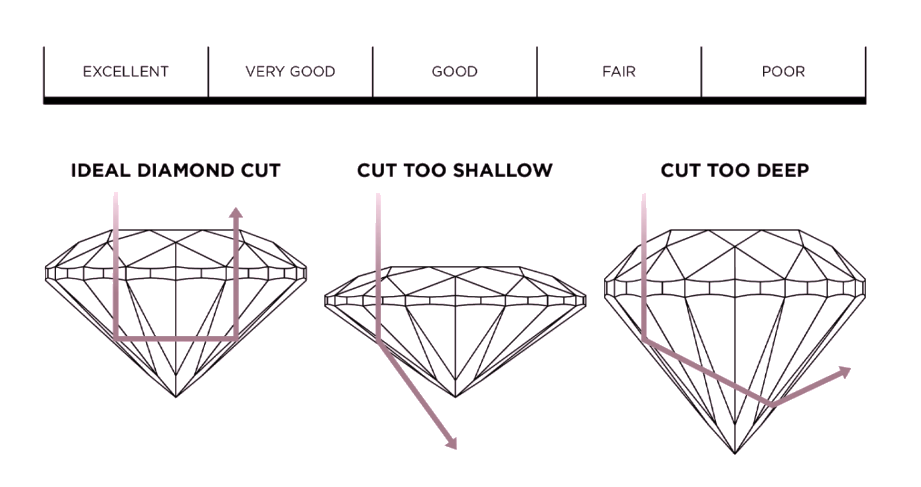
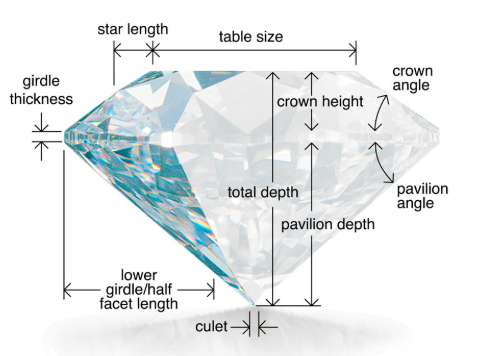
Cut is the most important of the 4C's. It determines how well a diamond reflects light, creating brilliance and sparkle. A well-cut diamond will appear more brilliant than a poorly cut diamond, even if the poorly cut diamond has better color and clarity grades.
Cut Grades:
- Excellent - Maximum brilliance and fire
- Very Good - Exceptional brilliance
- Good - Above average brilliance
- Fair - Some brilliance lost
- Poor - Little brilliance
Carat
Carat is the unit used to measure how much a diamond weighs. One carat equals 200 milligrams. A higher carat weight usually means a larger diamond, but weight alone doesn't determine how impressive a stone looks. Its cut, color, and clarity can make a diamond of the same carat appear brighter, bigger, or more valuable. Understanding carat weight helps you compare stones and choose the one that delivers the best overall beauty.
Popular Sizes:
- 0.50 carat - Delicate and elegant
- 1.00 carat - Most popular choice
- 1.50 carat - Noticeable presence
- 2.00+ carat - Statement piece
Natural vs Lab-Grown Diamonds
Natural Diamonds
Formed over billions of years deep within the Earth's mantle. Each natural diamond is unique with its own characteristics and history.
- Billions of years old
- Rare and finite resource
- Carries deep emotional and generational meaning
- Timeless, traditional choice
Lab-Grown Diamonds
Created in controlled laboratory environments using advanced technology. Chemically, physically, and optically identical to natural diamonds.
- Created in weeks
- More affordable (90-95% less)
- Environmentally conscious option
- Same physical properties
Both types are real diamonds. The choice between natural and lab-grown is personal, based on your values, budget, and preferences. We offer both options and will help you make the best choice for your needs.
Understanding Gold Purity
Gold purity is measured in karats (kt). Pure gold is 24kt, but it's too soft for jewelry. Gold is mixed with other metals to increase durability. Here's what you need to know:
10KT Gold
41.7% PureMost durable and affordable option. Ideal for everyday wear and active lifestyles. Contains 41.7% pure gold mixed with stronger alloy metals. Less prone to scratching and bending.
14KT Gold
58.3% PurePerfect balance of purity, durability, and value. The most popular choice for engagement rings and fine jewelry. Contains 58.3% pure gold. Offers excellent wearability with a rich color.
18KT Gold
75% PureLuxurious and rich in color. Contains 75% pure gold for a vibrant hue. Softer than 14kt, so requires more care. Preferred for fine jewelry and those who love the warmth of gold.
22KT Gold
91.7% PureVery high purity with deep, rich color. Contains 91.7% pure gold. Quite soft and malleable, so best for special occasion pieces or intricate designs. Common in traditional and cultural jewelry.
Gold Color Options
Gold comes in three main colors, achieved by mixing pure gold with different alloy metals:
- Yellow Gold: Classic warm tone. Mixed with copper and silver.
- White Gold: Silvery appearance. Mixed with palladium or nickel, plated with rhodium.
- Rose Gold: Romantic pink hue. Mixed with higher copper content.
Ready to Start Your Journey?
Now that you understand diamond quality and gold purity, let's create something beautiful together.
Start Your Ring